

The Floating Wharf
The KMSB facility is uniquely designed to address the significant tidal challenges that the region faces.
KMSB Port Terminal
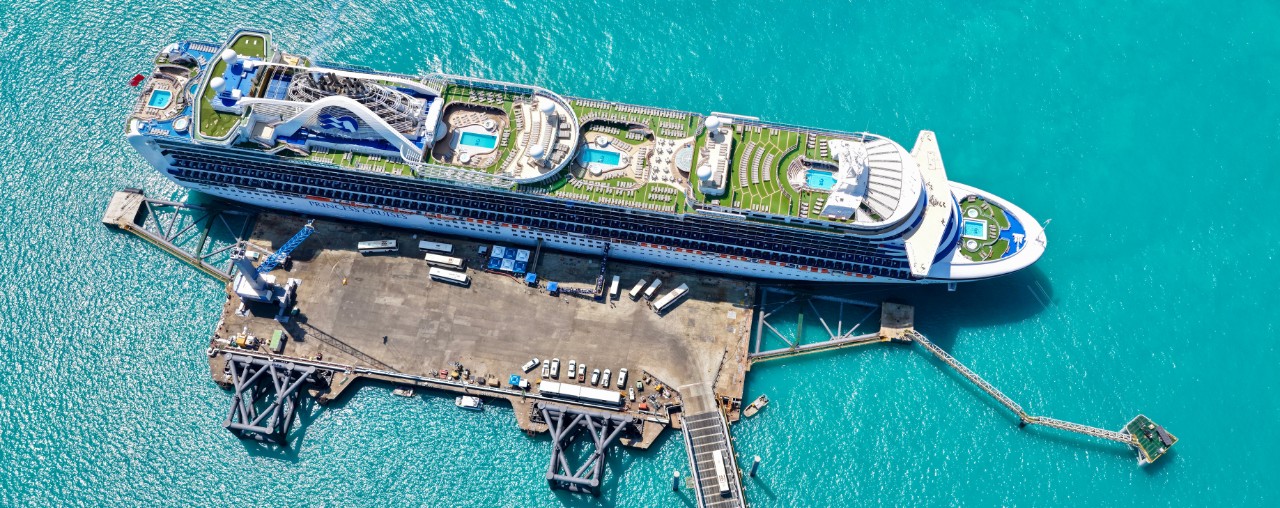
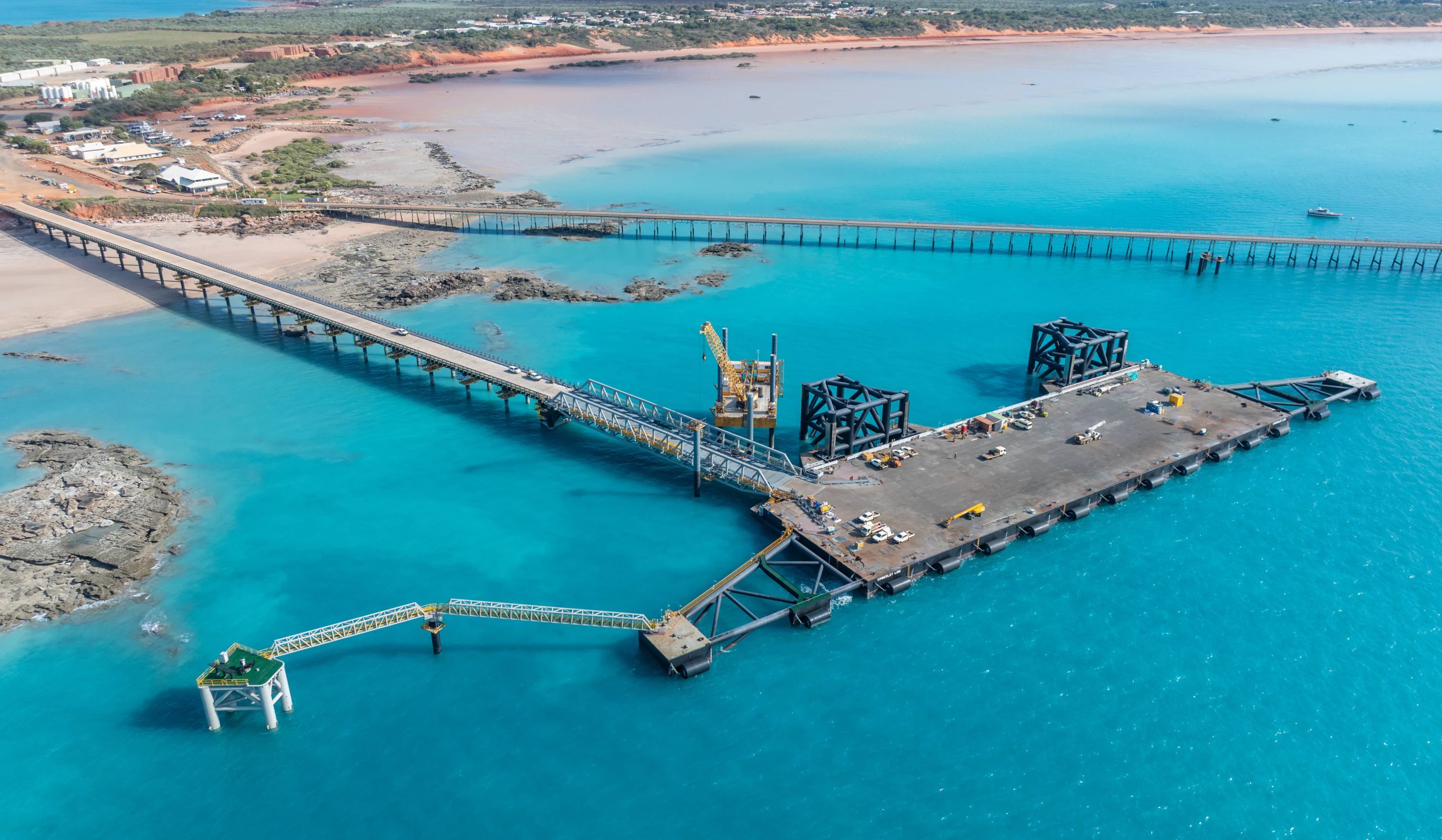
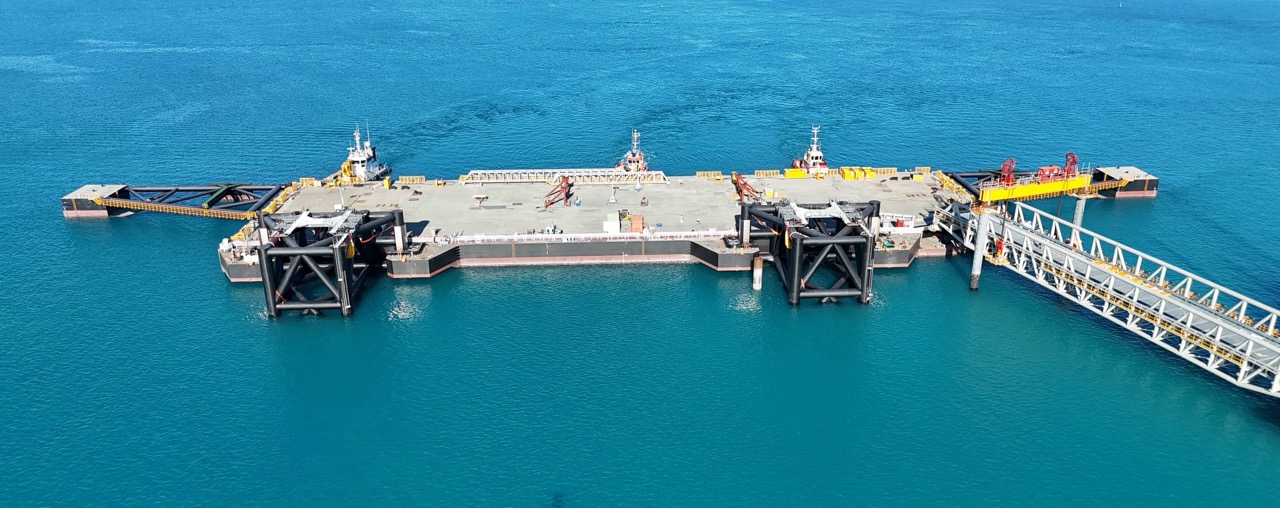
At the core of KMSB is a state-of-the-art floating wharf, engineered to operate 24/7 despite Broome’s extreme tidal variations. The 11,500+ tonne, 8,250 square metre structure includes a 265-metre berth line including northern and southern dolphins, 400-metre bi-directional causeway, supported by an 85-metre linkspan bridge. This infrastructure sits within a naturally deep berth pocket (-15m LAT), whilst multiple berths enable consistent access for small vessels to ones ranging to 348 metres length overall (LOA). The facility is equipped for high-load operations, including a high-capacity mobile harbour crane for cargo, subsea equipment, and modules, with integrated diesel bunkering delivering up to 3,300 L/min (198 m³/hr).

This robust design not only ensures operational reliability but also minimises environmental impact, making the KMSB facility a versatile and sustainable solution to Broome’s tidal challenge.
-18° 0.2632' 122° 12.9641'
Wharf Specifications:
Infrastructure & Equipment
Heavy-Duty Floating Wharf
- 165m-long x 50.4m-wide pontoon
- Total Berthline is 265m supported by mooring dolphins
- Accommodate vessels up to 348m LOA
- 85m Linkspan bridge connects wharf to a 400m bi-directional causeway
- Draft: -15.0m LAT natural deep-water pocket
- Beam: Accommodates large-scale vessels (RoRo, PSV, container, breakbulk) – design suitable for large cruise ships
- Length overall (LOA): 348m
- Dynamic/static studies confirmed for 200m and 235m RoRo vessels
Cargo-Handling Equipment
Load Bearing Capacity:
- High load-bearing deck with heavy-lift zone for cranes and trucks
- 5,400 sqm JIT staging on wharf
Crane Capacity:
- 125t mobile harbour crane (heavy lift across renewables, mining, RoRo, container)
- Mobile cranes: 30t, 60t, 100t, 300t
Forklifts:
- 3t, 4.5t, 10t, and 16t-rated
Fuel/Water Loading Rates:
- Fuel: up to 198,000L/hour (3,300L/min)
- Potable water: up to 100,000L/hour
- Integrated electrical power supply to berth
- Containers (20’/40’), RoRo (vehicles, buses, trucks, HME), breakbulk, project cargo, oil and gas supplies, mining equipment, general cargo
- Biosecurity Entry Point. FPOE approval for Vessels other than non-commercial vessels, inorganic bulk goods, baggage carried on a vessel other than a non-commercial vessel or a passenger vessel (to facilitate crew change baggage) and waste.
- Wharf JIT laydown: approximately 5,400 sqm
- Port Drive East: 1.5ha available within port limits
- Port Drive West laydown: approximately 17ha under staged development within port limits (2km from wharf)
- A proposed AA-rated tailgate processing site
- 7.3m x 3m – Mooring and breasting dolphins engineered for large commercial vessels
- 165m Floating wharf design includes adaptive tide tracking and engineered restraint jackets for tidal movement
- High-output LED floodlighting integrated for full-night operations
- Safety-rated, compliant with maritime standards
Operational Performance
Target: Fast berth-to-backland offload efficiency
Enhanced by 5,400 sqm quayside staging, experienced stevedoring, and 4-pillar operational model
24/7 Availability – client-led scheduling model
Fuel: up to 198 m³/hr marine-grade bunker delivery
Potable water: up to 100kl/hr
Waste Services: Managed via licensed contractors – capability available for oil, grey/black water removal
Project logistics modelling includes:
- Offshore energy field supply (Browse Basin: 500 km vs Darwin 800 km).
- Wind blade offload scenario (tide, causeway, linkspan elevation aligned for 90m cargo).
- RoRo engagement with Wallenius Wilhelmsen underway.
- Carbon emission saving: approximately 41t CO2-e per PSV round trip; approximately 16,000L fuel saved versus Darwin or Fremantle.
Logistics
- Direct sealed access via Port Drive (approx 2km from wharf to laydown)
- Bi-directional causeway rated for quad/triple road trains
- Network connects to Great Northern Highway within 5 km
- All road curves, grades, and powerline clearances mapped for 90m+ blades and heavy modules
- No current direct rail access – multimodal interchange supported by Broome’s logistics contractors
- KMSB can integrate with rail at Port Hedland via Lumsden Point warehousing facility
- KMSB Terminal 2 is biosecurity entry point (BEP) for
- Vessels other than non-commercial vessels
- Inorganic bulk goods
- Baggage carried on a vessel other than a non-commercial vessel or a passenger vessel (to facilitate crew change baggage)
- Waste
- Aim to achieve NFPOE designation
Safety & Security
Site SOPs in place for:
- Vessel fire and fuel spills.
- Wharf-side and landside incidents.
- Environmental monitoring via JV: Wangurru Nilangany (Yawaru and O2 Marine)
Integrated with Broome Port Authority and regional emergency services.
- Wharf designed for firefighting access and vessel interface
- Portable and static firefighting systems in final commissioning stage
- Response-trained stevedoring and HSEQ personnel on-site
- ETS – Services
- Tiered site first aid with trained responders
- Rapid ambulance access to Broome Hospital (approximately 5 to 10 minutes)
- MOU in place for major incident support with local emergency services
Latest Updates & Announcements
Operational Capabilities
12.09.2025
Port Infrastructure
08.07.2025

Submit Berth Application

Contact Our Team Today


