

One year in: expanding what is possible through the Port of Broome
Twelve months after opening Terminal 2, KMSB has demonstrated how additional infrastructure, tide-independent access and flexible operations can support a broader range of vessel activity through Broome.
When Terminal 2 opened on 12 September 2025, the objective was straightforward: give operators more options, improve berth certainty and create greater flexibility for vessels working through the Port of Broome.
One year on, that capability has been applied across bulk exports, cruise, livestock, offshore support, defence and marine services.
The operations have been varied, but the approach has remained consistent: understand what the customer needs to achieve, bring together the required infrastructure and resources, and find practical ways to keep vessels, cargo and people moving.
International vessel campaigns
In February 2026, Terminal 2 became a designated Biosecurity Entry Point, allowing eligible international vessels to use the KMSB facility as their first port of call into Australia.
The designation was first put into practice the following month through an offshore campaign involving multiple platform supply vessels arriving from Singapore. It was subsequently used for cattle vessels and bulk carriers supporting KMS operations.
The designation has since supported KMSB’s ability to manage international vessel programs through the facility, including biosecurity clearance, quayside servicing and landside logistics.
Greater certainty for cruise
Cruise operations provided another early demonstration of what tide-independent access can support.
In April, Crown Princess completed Broome’s first overnight large cruise call, allowing the vessel to remain alongside through the night rather than working around a more limited berth window.
That additional certainty gives cruise operators greater flexibility around arrival and departure times, passenger movements and itinerary planning.
For Broome, the extra hours in port meant extra hours of trade, with passengers dispersing through the town’s markets, tours and evening dining rather than returning to the ship.

"When we opened Terminal 2, the objective was to give operators more options and remove some of the practical constraints that had historically shaped marine activity in Broome," Mr Natta said.
A new bulk loadout benchmark
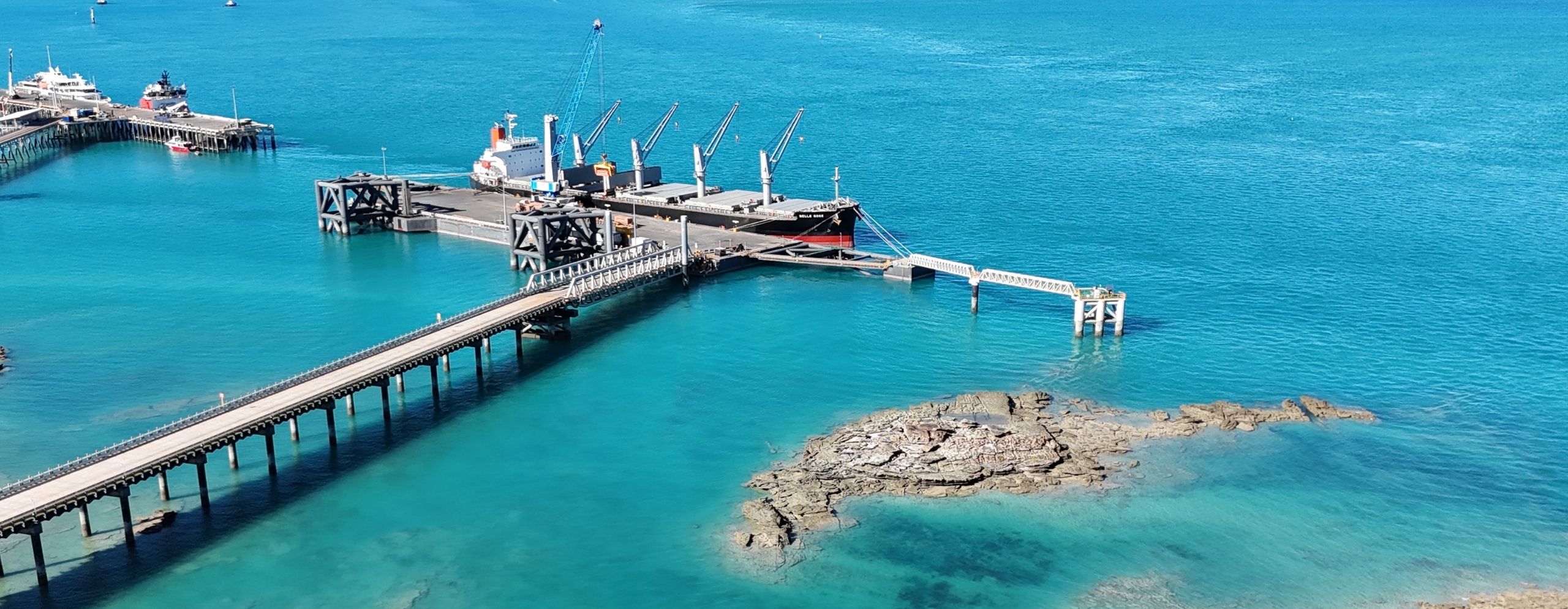
MV Belle Rose called at the Port of Broome for a bulk mineral loadout, averaging 458 tonnes per hour across the operation and recording the fastest sustained bulk loadout achieved at Terminal 2 to date. The result demonstrated the value of coordinating berth access, crane capability and landside logistics as one operation.
Expanding berth capacity
Terminal 2’s 50.4 metre-wide floating wharf allows operations to run from either side, providing an outer berth for larger vessel calls and an Inner Berth for smaller marine services and support vessels, where vessel size, draft and operational requirements permit.
That additional capacity was demonstrated in August, when a 19 metre marine services vessel used the Inner Berth while a 189 metre cargo vessel remained alongside the outer berth, with both operations continuing at the same time.
The marine services vessel returned the following day for an urgent delivery, with the berth, crane and operational support mobilised without disrupting the cargo operation already underway. The successful trial demonstrated the practical potential of the Inner Berth and will help pave the way for further small-vessel calls alongside larger operations.
Flexibility when it matters
That flexibility was demonstrated in August when two very different vessel calls needed to be accommodated within the same berth window. A bulk carrier was partway through a multi-day cargo operation when an expedition cruise vessel required the berth for a 10-hour turnaround.
KMSB worked with both customers to adjust the berth plan so the cruise call could be accommodated while bulk operations continued.
The result was a practical solution built around both customers’ requirements, keeping both vessel schedules on track.
Greater certainty through Broome’s tides
For livestock operators, the floating wharf’s tide-independent access has provided greater operational certainty through the Kimberley cattle export season.
During the year, Terminal 2 supported livestock vessel calls under tidal conditions that would otherwise have restricted when a vessel could berth.
In a port with a tidal range exceeding 10 metres, reducing the influence of tide on berth access can make a material difference to vessel scheduling and operational planning.
High-flow bunkering comes online
KMSB added another service to Terminal 2 during the year with the commissioning of its high-flow diesel bunkering pipeline.
Silver Cloud cruise vessel became the first vessel fuelled through the system in June, with infrastructure capable of delivering fuel at approximately 3,300 litres per minute, one of the highest-flow marine bunkering rates in Australia.
The system adds another option for vessels requiring fuel while operating through Broome and can be used alongside other terminal services during a vessel call.
Investment beyond the berth
KMSB’s first year of operations also included investment outside the terminal itself.
The company fully funded major road works at the Port of Broome entrance, including a new roundabout, the realignment of Kabbarli Road, drainage upgrades, water-main relocation and supporting utility works.
The works improve access across the broader port precinct and form part of KMSB’s continued investment in the infrastructure supporting operations through Broome.
Supporting the Broome community
KMSB’s investment in Broome has also extended into the local community.
Over the past year, KMSB has supported local organisations and events including the Broome Fishing Club and its Kids Fishing Classic, Purple Hands, the Broome Pearlers Football Club and Kimberley cattle industry initiatives.
Where possible, KMSB also continues to work with local suppliers and contractors as part of its operations in Broome.
Vessels coming back
Repeat visitation has been one of the clearest indicators of Terminal 2’s first year. Just over half of the individual vessels serviced returned more than once, while 76% of all vessel visits came from vessels that had previously used the facility.
"What I'm most proud of is the way our team has responded, understanding what customers need, adapting quickly and bringing together the right resources to find practical solutions that keep vessels and cargo moving."
“In just 12 months, we have seen that capability used across bulk exports, cruise, livestock, offshore support, defence and marine services, often in ways that would previously have been difficult or simply not possible.
“The first year has shown what this infrastructure can do. There is still a lot more opportunity ahead for Broome and the wider Kimberley.” Mr Natta said
Looking ahead
The first year has demonstrated the breadth of operations Terminal 2 can support and the value of combining infrastructure with responsive, customer-focused operations.
KMSB will continue to build on that capability through further investment in infrastructure, equipment and people, while looking for practical and innovative ways to improve regional supply chains and create new opportunities through Broome and across the North West.
For berth bookings or to discuss an upcoming vessel call, contact the KMSB team.
Latest Updates & Announcements
Operational Capabilities
12.09.2025
Port Infrastructure
08.07.2025

Submit Berth Application

Contact Our Team Today


