


The Floating Wharf
The KMSB facility is uniquely designed to address the significant tidal challenges that the region faces.
KMSB Port Terminal
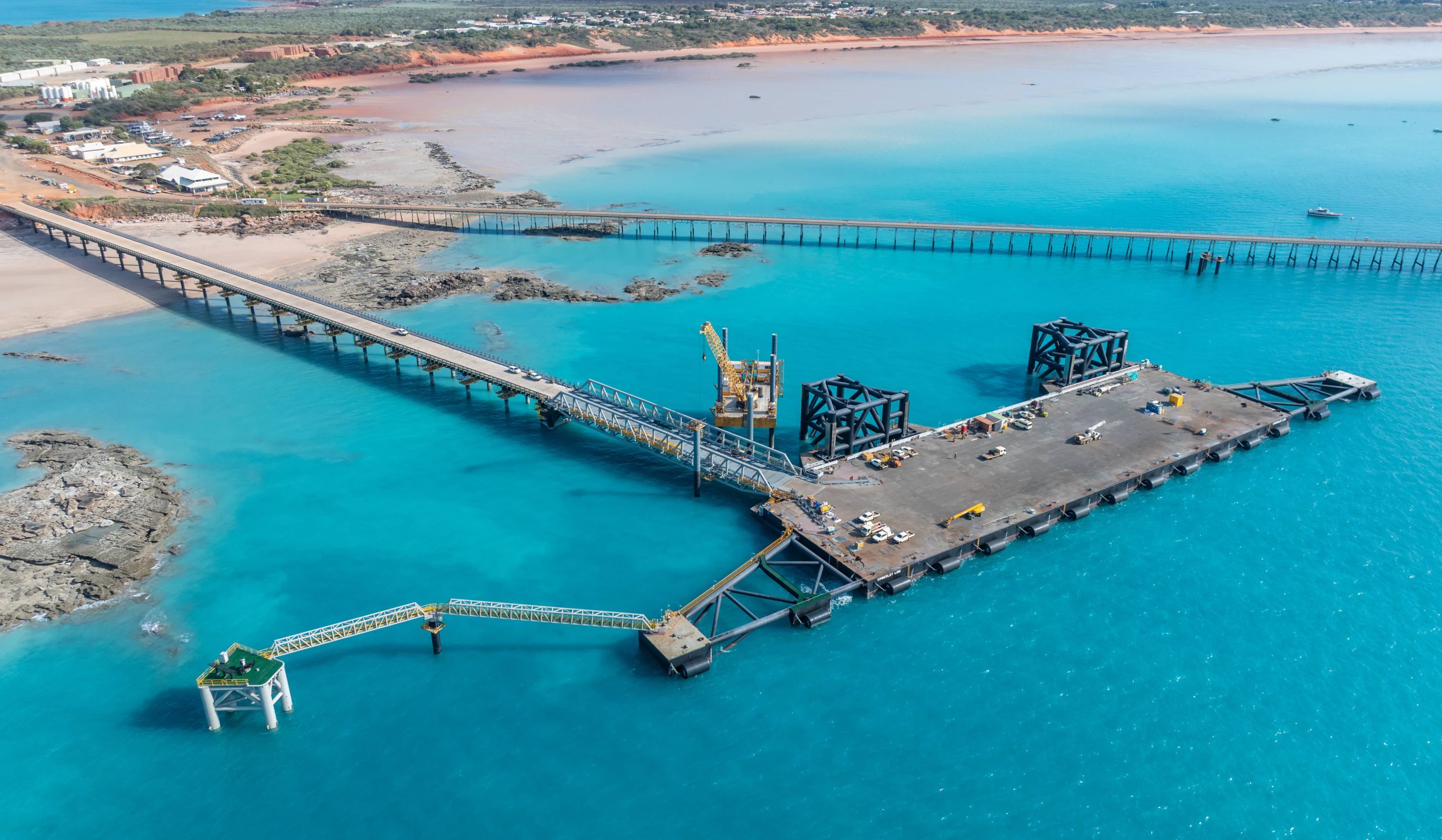
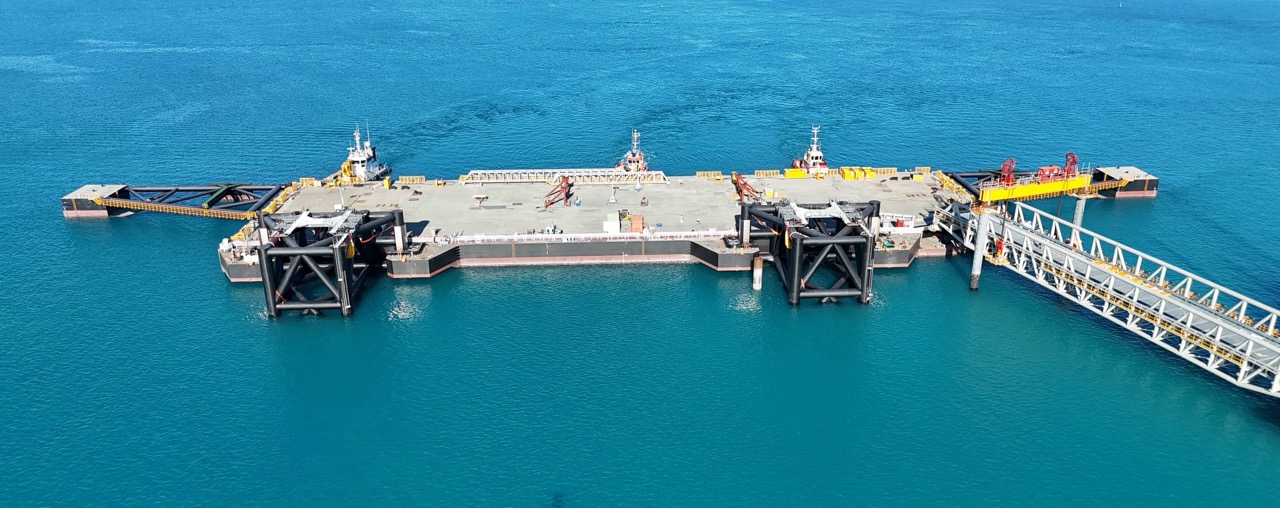
At the core of KMSB is a state-of-the-art floating wharf, engineered to operate 24/7 despite Broome’s extreme tidal variations. The 11,500+ tonne, 9,250 square metre structure includes a 255-metre berth line plus northern and southern dolphins, 400-metre bi-directional causeway, supported by an 85-metre linkspan bridge. This infrastructure sits within a naturally deep berth pocket (-15m LAT), whilst multiple berths enable consistent access for small vessels to ones ranging to over 300 metres length overall (LOA). The facility is equipped for high-load operations, including a high-capacity mobile harbour crane for cargo, subsea equipment, and modules, with integrated diesel bunkering delivering up to 200,000 litres per hour.

This robust design not only ensures operational reliability but also minimises environmental impact, making the KMSB facility a versatile and sustainable solution to Broome’s tidal challenge.
-18° 0.2632' 122° 12.9641'
Wharf Specifications:
Infrastructure & Equipment
Heavy-Duty Floating Wharf
- 255m-long x 50m-wide Berth
- 85m Linkspan Bridge
- Connected via 400m bi-directional causeway
- Integrated with mooring and breasting dolphins for vessels up to 348m+LOA
- Draft: -15.0m LAT natural deep-water pocket
- Beam: Accommodates large-scale vessels (RoRo, PSV, container, breakbulk) – design suitable for Panamax+
- Length overall (LOA): 348m+
- Dynamic/static studies confirmed for 200m and 235m RoRo vessels
Cargo-Handling Equipment
Load Bearing Capacity:
- High load-bearing deck with heavy-lift zone for cranes and trucks
- 8000–10,000 sqm JIT staging on wharf
Crane Capacity:
- Kone ESP.6 mobile harbour crane (heavy lift across renewables, mining, RoRo, container)
- Mobile cranes: 30t, 60t, 100t, 300t
Forklifts:
- 3t, 4.5t, 10t, and 16t-rated
Fuel/Water Loading Rates:
- Fuel: 200,000L/hour (3,333L/min)
- Potable water: 100,000L/hour
- Integrated electrical power supply to berth
- Containers (20’/40’), RoRo (vehicles, buses, trucks, HME), breakbulk, project cargo, oil and gas supplies, mining equipment, general cargo
- Supporting FPOE readiness for future live export and cruise vessels (subject to regulatory alignment)
- Wharf JIT laydown: approximately 8,250 sqm
- Port Drive West laydown: approximately 17ha under staged development (1km from wharf)
- Strategic hardstand: 20+ ha with scalable options for clients
- A proposed AA-rated tailgate processing site
- 7.1m x 3m – Mooring and breasting dolphins engineered for large commercial vessels
- Floating wharf design includes adaptive tide tracking and engineered restraint jackets for tidal movement
- High-output LED floodlighting integrated for full-night operations
- Safety-rated, compliant with maritime standards
Operational Performance
Target: Fast berth-to-backland offload efficiency
Enhanced by 8,250 sqm quayside staging, experienced stevedoring, and 4-pillar operational model
24/7 Availability – client-led scheduling model with pre-booking through rate card and booking system.
No legacy congestion – Greenfield site with direct berth access.
KMSB controls bookings directly, ensuring optimal berthing windows and traffic flow.
Fuel: 200kl/hr marine-grade bunker delivery
Potable water: 100kl/hr
Waste Services: Managed via licensed contractors – capability available for oil, grey/black water removal
Project logistics modelling includes:
- Offshore energy field supply (Browse Basin: 500 km vs Darwin 800 km).
- Wind blade offload scenario (tide, causeway, linkspan elevation aligned for 90m cargo).
- RoRo engagement with Wallenius Wilhelmsen underway.
- Carbon emission saving: approximately 41t CO2-e per PSV round trip; approximately 16,000L fuel saved versus Darwin or Fremantle.
Logistics
- Direct sealed access via Port Drive (1km from wharf to laydown)
- Multi-lane causeway rated for quad/triple road trains
- Network connects to Great Northern Highway within 5 km
- All road curves, grades, and powerline clearances mapped for 90m+ blades and heavy modules
- No current direct rail access – multimodal interchange supported by Broome’s logistics contractors
- KMSB can integrate with rail at Port Hedland via Lumsden Point warehousing facility
- Currently under assessment – KMSB is developing biosecurity/FPOE solutions
- Interim FPOE model supports container pre-clearance in other ports with transit to Broome
- Aim to achieve NFPOE designation within 12 to 18 months of operation
Safety and Security
Site SOPs in place for:
- Vessel fire and fuel spills.
- Wharf-side and landside incidents.
- Environmental monitoring via JV: Wangurru Nilangany (Yawaru and O2 Marine)
Integrated with Broome Port Authority and regional emergency services.
- Wharf designed for firefighting access and vessel interface
- Portable and static firefighting systems in final commissioning stage
- Response-trained stevedoring and HSEQ personnel on-site
- ETS – Services
- Tiered site first aid with trained responders
- Rapid ambulance access to Broome Hospital (approximately 5 to 10 minutes)
- MOU in place for major incident support with local emergency services
Get Updates First On LinkedIn
Major announcements, progress updates, and industry insights - delivered where professionals meet.
Latest Updates & Announcements
Operational Capabilities
12.09.2025
Port Infrastructure
08.07.2025

Download Booking Form

Contact Our Team Today


